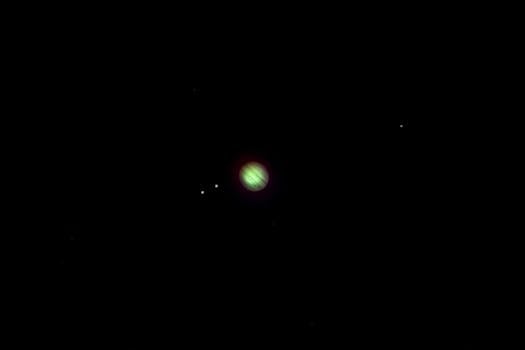
Jupiter, the gas giant and largest planet in our solar system, has long captured the imagination of astronomers and space enthusiasts alike. Its sheer size and mass are impressive, but one of the most fascinating aspects of Jupiter is its numerous moons. The question of “cuantas lunas tiene jupiter?” reveals the richness and diversity of the celestial bodies orbiting this massive planet.
Table of Contents
- How many moons does Jupiter have in total?
- What are the names of Jupiter’s moons?
- How are the moons of Jupiter classified?
- What are the Galilean moons of Jupiter?
- How do the moons of Jupiter compare to other planets?
- What is the significance of Jupiter’s moons in astronomy?
- What are the unique features of each Galilean moon?
- Frequently asked questions about Jupiter’s many moons
How many moons does Jupiter have in total?
As of the latest data, Jupiter is known to have a staggering 79 moons in total. This number is a testament to the planet’s strong gravitational pull, which allows it to capture various objects in its orbit. These moons range in size from tiny moonlets less than a kilometer in diameter to the enormous Galilean moons, which are larger than some planets.
The count of Jupiter’s moons is a subject of ongoing discovery, with several moons being recently identified through modern telescopic technology. It’s a number that may continue to rise as the outer reaches of Jupiter’s influence are further explored.
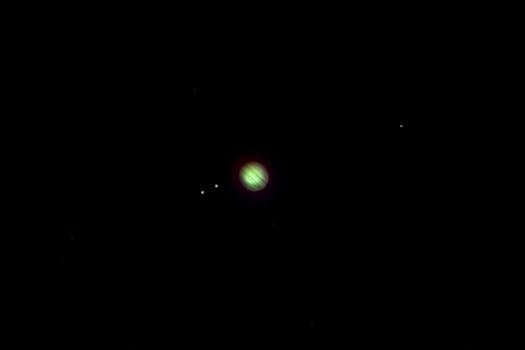
Understanding the total count of Jupiter’s moons provides insights into the complexity and formation of our solar system, making it a key area of study for astronomers.
What are the names of Jupiter’s moons?
Jupiter’s moons are a diverse group with a range of features and characteristics. The most well-known are the four largest moons, discovered by Galileo Galilei in 1610, named the Galilean moons: Io, Europa, Ganymede, and Callisto. Each of these moons is unique in its own right, with distinctive physical characteristics that set them apart from each other.

In addition to the Galilean moons, Jupiter has many smaller moons, which have been named after figures from Roman and Greek mythology, as well as after Galileo’s discovery. The names reflect a variety of mythological characters associated with the Roman god Jupiter or his Greek counterpart, Zeus.

Among the smaller moons, some notable names include Metis, Adrastea, Amalthea, and Thebe. Many of the recently discovered moons await official names, currently designated by provisional nomenclature.
How are the moons of Jupiter classified?
- Regular Satellites: These moons have prograde orbits and are believed to have formed alongside Jupiter.
- Irregular Satellites: These are further classified into prograde and retrograde groups and are thought to be captured objects, such as asteroids or comets.
- Groupings: Some of the smaller moons are grouped together based on similar orbits and characteristics, suggesting a common origin, possibly as fragments from collisions.
Classifying Jupiter’s moons helps scientists understand their origins and the history of the solar system.
What are the Galilean moons of Jupiter?
The four Galilean moons—Io, Europa, Ganymede, and Callisto—are among the most intriguing objects in our solar system. Io is the most volcanically active body in the solar system. Europa is covered by a layer of ice and is believed to have a subsurface ocean, making it a prime candidate in the search for extraterrestrial life.
Ganymede is the largest moon in the solar system and is unique in that it possesses its own magnetic field. Callisto, peppered with craters, has an ancient and heavily impacted surface, providing a visual history of collisions in space.
The Galilean moons are not only a point of interest for their physical characteristics but also for their potential to host life, their geological activity, and their impact on our understanding of planetary science.

How do the moons of Jupiter compare to other planets?
When compared to the moons of other planets, Jupiter’s moons are remarkable both in number and in diversity. Saturn, the second-largest planet in our solar system, also has a large number of moons, including Titan, which is larger than Mercury. However, Jupiter’s moons, particularly the Galilean moons, offer a variety of geological and potentially astrobiological features that are not found elsewhere.
For example, the volcanic activity on Io is unparalleled, while Europa’s subsurface ocean is a key interest in the search for life beyond Earth. Ganymede’s magnetic field is a rarity among moons, pointing to a complex interior.

The comparison of Jupiter’s moons to those orbiting other planets highlights the uniqueness of our solar system and emphasizes the significance of each celestial body in contributing to our overall understanding of planetary science.

What is the significance of Jupiter’s moons in astronomy?
Jupiter’s moons play a critical role in the field of astronomy. They serve as excellent case studies for understanding the formation and evolution of planetary systems. The Galilean moons, in particular, have been instrumental in shaping our understanding of orbital mechanics and gravitational interactions.
The discovery of these moons provided some of the first evidence supporting the heliocentric model of the solar system, which posits that the Earth and other planets orbit the Sun. This was a monumental shift from the geocentric model, which placed the Earth at the center of the universe.

Furthermore, ongoing research and exploration of Jupiter’s moons, particularly with missions like NASA’s Europa Clipper, continue to push the boundaries of our knowledge, providing valuable insights into the potential for life in our solar system and beyond.
What are the unique features of each Galilean moon?
I will now delve into the unique features of the Galilean moons to understand why they captivate scientists and the general public alike.

Io’s Volcanic Landscape
Io’s surface is dotted with hundreds of volcanoes, some of which are active, spewing sulfur and sulfur dioxide hundreds of kilometers into space. This intense volcanic activity is due to the strong tidal forces exerted on Io by Jupiter’s gravity.
Europa’s Subsurface Ocean
Europa’s icy surface is crisscrossed with cracks and streaks, indicating a dynamic and young surface. Beneath the ice, there is strong evidence for a vast ocean of liquid water, kept warm by tidal heating, which could harbor simple forms of life.

Ganymede’s Magnetic Field
Ganymede is not only the largest moon in the solar system, but it also has its own magnetic field, which is unique for a moon. This suggests a differentiated interior with a liquid iron or iron-sulfide core.
Callisto’s Cratered Surface
Callisto’s heavily cratered surface stands as a record of the bombardment history of the outer solar system. Unlike the other Galilean moons, Callisto shows no signs of current geological activity.
Frequently asked questions about Jupiter’s many moons
How many moons does Jupiter have in total?
As of the latest observations, Jupiter is confirmed to have 79 moons. This count includes both the well-known Galilean moons and smaller, irregular satellites that have been identified over time.

The number of moons may continue to grow as technological advancements in telescopes and observational methods allow astronomers to detect even smaller and more distant objects in orbit around Jupiter.
What are the names of Jupiter’s 79 moons?
While the four largest moons, the Galilean moons, are named Io, Europa, Ganymede, and Callisto, the other 75 range from larger bodies with mythological names to smaller, yet-to-be-named satellites. Some of the lesser-known moons include Amalthea, Himalia, Elara, Pasiphae, and Sinope, among others.

Does Jupiter have 79 or 53 moons?
Jupiter has a total of 79 confirmed moons, although this number may change with new discoveries or reclassification. The number 53 may refer to an older count before additional moons were discovered.
What planet has 7 rings and 60 moons?
The planet Saturn is known for having seven main rings and over 60 moons, including Titan, its largest moon. Saturn is often compared to Jupiter due to its size and complex ring and moon systems.

In conclusion, Jupiter’s moons offer a fascinating glimpse into the variety and complexity of celestial bodies orbiting our solar system’s largest planet. From the volcanic Io to the ice-covered Europa, each moon has its own story to tell, contributing to the rich tapestry of planetary science. As exploration continues, we can expect to uncover even more secrets of these exotic worlds, further enhancing our understanding of the cosmos.