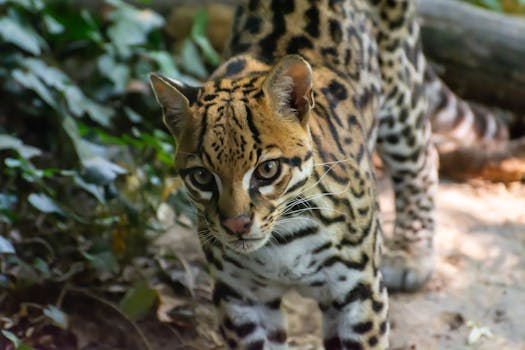
Ocelots, the enigmatic wildcats, have intrigued many with their striking appearance and secretive nature. Once ranging across the southern United States, these medium-sized felines now find themselves facing the challenges of conservation and survival in an ever-changing world.
Table of Contents
- Ocelot facts: What you need to know
- What is the ocelot size?
- How to pronounce ocelot?
- Can you keep an ocelot as a pet?
- What is the current ocelot population?
- Discovering ocelot babies: What to expect
- Understanding ocelot temperament and behavior
- Where do ocelots live? Insights into their habitat
- Frequently asked questions about ocelots
Ocelot facts: What you need to know
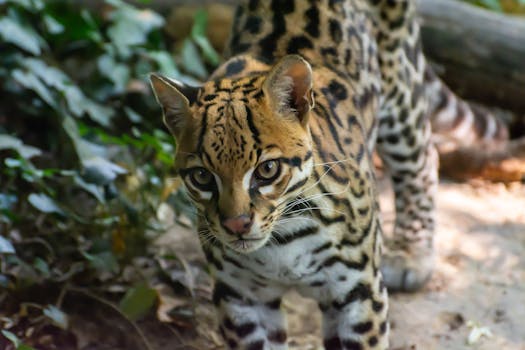
With their unique coat patterns, ocelots are often admired for their beauty. These wildcats are known for their distinct spotted fur, which provides excellent camouflage in their natural habitat. Ocelots typically weigh between 15 and 30 pounds and measure about 29 to 39 inches in length, not including their tails.
Their diet mainly consists of small mammals, birds, and reptiles. These solitary hunters are primarily nocturnal, using their keen senses to track down prey under the cloak of darkness. Unfortunately, ocelots are critically endangered in the U.S., with habitat loss being a significant factor.
Conservation efforts for ocelots focus on habitat preservation and increasing public awareness. Organizations such as Defenders of Wildlife are at the forefront, working tirelessly to ensure the survival of this remarkable species through various initiatives.
What is the ocelot size?
Ocelots are considered medium-sized among the wildcat family. An adult ocelot can grow up to be around 28 to 35 inches long, with an additional tail length of about 10 to 14 inches. Their shoulder height ranges from 16 to 20 inches, making them significantly smaller than some of their big cat cousins.
Despite their size, ocelots are adept predators. Their proportionate, muscular build allows them to be agile and swift when hunting. Although they’re not the largest felines in the wild, their size is ideal for maneuvering through their preferred tropical habitats.
Understanding the size of these wildcats helps conservationists to design better habitats in captivity and aids in identifying their tracks and signs in the wild, which is crucial for monitoring their populations.
How to pronounce ocelot?
The pronunciation of ‘ocelot’ can sometimes cause confusion. It is correctly pronounced as “OSS-uh-lot.” Emphasis is placed on the first syllable, and the ‘o’ is pronounced like the ‘o’ in ‘cost.’ The ‘cel’ is pronounced like ‘sell,’ and the ‘ot’ is like the ‘lot’ in ‘parking lot.’
When speaking about these fascinating creatures, getting the pronunciation right shows respect for the species and helps in raising awareness about their conservation status.
Whether you’re a wildlife enthusiast, a conservationist, or simply someone interested in learning more about these creatures, knowing how to pronounce their name correctly is a good starting point.
Can you keep an ocelot as a pet?
- It is not advisable to keep ocelots or any wildcat as pets due to their specific needs and natural behaviors.
- Ocelots require a vast territory to roam, hunt, and exhibit natural behaviors, which cannot be provided in a home setting.
- Owning an ocelot can be illegal in many places and requires special permits due to their status as endangered species.
- Ocelots can become aggressive and unpredictable, making them unsuitable for life as domestic pets.
- It is essential to support ocelot conservation by appreciating them in the wild or in accredited zoos rather than keeping them as pets.
What is the current ocelot population?
The current ocelot population is difficult to determine due to their elusive nature. However, it is estimated that fewer than 100 individuals remain in the wild in the United States, primarily in southern Texas. Globally, their numbers are also declining due to habitat destruction, poaching, and other threats.
Conservation efforts are critical for their survival, particularly initiatives aimed at habitat protection and restoration. These efforts are often led by organizations such as Defenders of Wildlife and supported by laws like the Endangered Species Act.
Globally, ocelots are listed under Appendix I of CITES (Convention on International Trade in Endangered Species), which means that international trade in ocelots or their parts is strictly prohibited to ensure their survival in the wild.
Discovering ocelot babies: What to expect
Ocelot babies, or kittens, are born after a gestation period of approximately 79 to 82 days. A typical litter consists of one to two kittens, though sometimes three may be born.
These kittens are born with their eyes closed and rely entirely on their mother for nourishment and protection. Within two months, they begin to leave the den and learn vital survival skills from their mother, including hunting techniques and territory navigation.
Protecting ocelot kittens is paramount for the survival of the species. Conservationists pay particular attention to breeding and rearing practices to ensure the best possible success rate for these vulnerable young wildcats.
Understanding ocelot temperament and behavior
Ocelots are known for their solitary and territorial nature. They are fiercely independent animals and mark their territory with scent markings to ward off other ocelots.
Their behavior is mainly nocturnal, and they spend the night hunting and exploring their territory. During the day, ocelots typically rest in trees or dense brush to avoid the heat and potential threats.
When it comes to interaction with humans, ocelots are generally shy and avoidant. It is imperative for their safety and well-being that we respect their space and wild nature.
Where do ocelots live? Insights into their habitat
Ocelots once roamed a vast area from the southern United States down through Central and South America. Today, their habitat has significantly diminished, with the remaining U.S. population found in small pockets of southern Texas.
They prefer dense, tropical habitats such as thick brush, forests, and swamps where they can blend into their surroundings and hunt effectively. Understanding the importance of these habitats is crucial in the efforts to conserve the species.
As habitat loss continues to be a significant threat, conservation initiatives focus on protecting and restoring these vital ecosystems to support healthy ocelot populations.
Frequently asked questions about ocelots
How many ocelots are left?
While exact numbers are challenging to determine, the ocelot population is known to be decreasing. In the United States, fewer than 100 ocelots are believed to be left in the wild, mainly in Texas.
This decline is a concern for wildlife preservation, prompting significant efforts to protect and monitor these elusive creatures. Conservationists utilize camera traps and tracking techniques to estimate population sizes and understand the dynamics of these wildcat communities.
Are ocelots a good pet?
Ocelots are not suitable pets due to their wild nature and the specialized care they require. They are solitary animals with instinctual behaviors that do not align with domestic life. It’s important to respect their place in the wild and support conservation rather than ownership.
Those interested in the well-being of ocelots can consider supporting organizations that focus on wildlife preservation and habitat conservation, ensuring these wildcats can thrive in their natural environment.
Are ocelots found in the USA?
Yes, ocelots are found in the USA, although their numbers are limited. The small population that exists is concentrated in the southern part of Texas, where conservation efforts aim to protect and expand their habitat.
These efforts are critical for the survival of the species within the U.S. and contribute to the broader international efforts to conserve ocelots.
Is an ocelot a rodent?
No, an ocelot is not a rodent. It is a wildcat, part of the Felidae family, which includes other big cats like lions, tigers, and leopards. Ocelots are carnivorous predators that play an essential role in the ecosystem as both hunter and species in need of conservation.
Understanding the classification of ocelots helps to dispel misconceptions about their role in the environment and highlights the importance of their protection.
To further enrich the understanding of ocelots, let’s take a look at some insightful videos on various aspects of these wildcats.
For a deep dive into the world of ocelots, including their behavior and habitat:
To better understand the importance of conserving the habitats these animals rely on:
Exploring the fascinating behaviors of ocelots:
And for quick, concise facts about these wildcats:
By understanding these beautiful creatures better, from their physical characteristics and natural behaviors to the conservation challenges they face, we can better appreciate the significance of preserving ocelot populations for future generations.