Eukaryotic cells are the hallmark of complex life, present in organisms ranging from humans to the fungi that antique cheese. Unlike their prokaryotic counterparts, eukaryotic cells boast a level of structural sophistication that allows for a division of labor among various specialized compartments, or organelles. This cellular complexity is not just a biological curiosity; it underpins the vast diversity of life we see today.
Table of Contents
- What is a eukaryotic cell?
- Characteristics of eukaryotic cells
- What are the main parts of a eukaryotic cell?
- Functions of the eukaryotic cell
- Differences between eukaryotic and prokaryotic cells
- Types of eukaryotic cells
- Evolutionary significance of eukaryotic cells
- Related questions about the parts and functions of eukaryotic cells
What is a eukaryotic cell?
At its most basic, a eukaryotic cell is defined by its true nucleus, where DNA resides, enclosed within a nuclear envelope. Beyond the nucleus, these cells feature a series of organelles, each with its own unique role in maintaining cellular health and function. From the power-generating mitochondria to the protein-factory ribosomes, eukaryotic cells are like miniature cities, buzzing with activity.
The term “eukaryotic” itself stems from Greek, meaning “true kernel,” a nod to the prominent nucleus. These cells form the building blocks of eukaryotes, a domain of life that includes all plants, animals, and fungi.
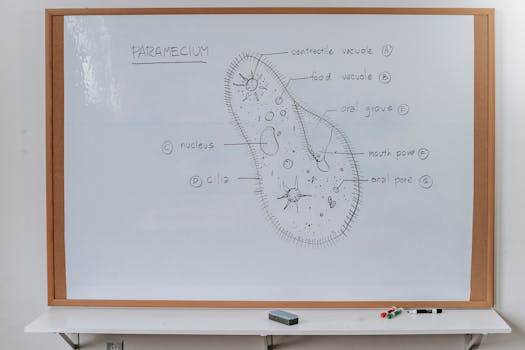
The intricate structure of these cells is not just for show. Each organelle’s unique environment allows for optimal performance of its tasks, contributing to the cell’s overall purpose – to sustain life.
Characteristics of eukaryotic cells
Eukaryotic cells distinguish themselves through several key characteristics. Their hallmark is the presence of a nucleus, which houses genetic material. But beyond this, they also contain a plethora of organelles, each wrapped in membranes that separate their internal reactions from the rest of the cellular environment.

Another defining feature is the cytoskeleton, an intricate network that provides structural support and facilitates movement and intracellular transport. The cell’s plasma membrane is a complex, selective barrier that regulates the flow of substances in and out of the cell, a critical function for maintaining homeostasis.
Moreover, eukaryotic cells participate in sexual reproduction through the process of meiosis, which generates genetic diversity. This diversity is a cornerstone of the biological resilience and complexity seen in multicellular organisms.
What are the main parts of a eukaryotic cell?
The parts of the eukaryotic cell are akin to the organs of the human body, each contributing a vital function to the whole. The nucleus, the command center of the cell, governs genetic information and instructs other organelles. Surrounding the nucleus is the endoplasmic reticulum, where proteins and lipids are synthesized.

The Golgi apparatus works in tandem with the endoplasmic reticulum, modifying and shipping proteins to their final destinations. Mitochondria, often dubbed the powerhouses of the cell, produce ATP, the cell’s energy currency. And let’s not forget the lysosomes, the cellular waste disposal units that break down and recycle cellular debris.
Peroxisomes protect the cell from its own toxic byproducts, and the cytoskeleton provides structural integrity. Meanwhile, the cell membrane, the gatekeeper of the cell, regulates what enters and exits, ensuring the proper functioning of the cell.

Functions of the eukaryotic cell
The functions of organelles in eukaryotic cells are as varied as the organelles themselves. The nucleus directs cell activities and stores genetic information, while the mitochondria convert energy into a usable form. The endoplasmic reticulum and Golgi apparatus work together to process and transport proteins.
Lysosomes digest cellular waste and pathogens, making them key to cellular defense. The cytoskeleton not only maintains cell shape but also aids in movement and cell division. Chloroplasts, found in plant cells, harness solar energy for photosynthesis.
Together, these organelles ensure that the cell can grow, reproduce, respond to environmental changes, and perform the many tasks necessary for survival.

Differences between eukaryotic and prokaryotic cells
When comparing the differences between eukaryotic and prokaryotic cells, the most striking contrast lies in organizational complexity. Eukaryotic cells have a nucleus and a variety of organelles, each with specific functions. Prokaryotic cells, such as bacteria, lack a true nucleus and have a simpler structure.
Prokaryotic cells are generally smaller and lack the compartmentalization seen in eukaryotes. They also reproduce differently, typically through binary fission, a simpler process than the mitotic division of eukaryotic cells.

The ribosomes of prokaryotes are smaller and differ in composition from those of eukaryotes. These differences are so fundamental that they represent one of the primary divisions of life on earth.
Types of eukaryotic cells
Eukaryotic cells come in a dazzling variety, with different types specialized for unique functions within multicellular organisms. For instance, muscle cells are optimized for contraction, whereas neurons are designed to transmit signals.
Plant cells contain chloroplasts for photosynthesis, while animal cells do not. Some single-celled eukaryotes, like amoebas, are capable of remarkable feats of transformation, altering their shape to move and consume food.

The diversity of eukaryotic cell types is a testament to the evolutionary versatility of this cellular construction kit. From the simplest algae to the human brain, eukaryotic cells form the biological fabric of life as we know it.
Evolutionary significance of eukaryotic cells
The evolution of eukaryotes marks a pivotal point in the history of life on earth. The emergence of eukaryotic cells some 1.5 billion years ago paved the way for the rise of complex multicellular life.
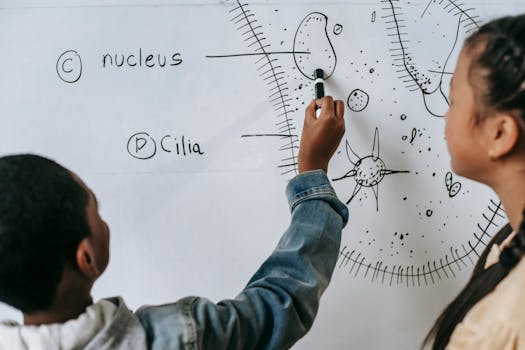
These cells’ ability to segregate tasks within different organelles allowed for greater efficiency and sophistication. This cellular complexity laid the foundation for the evolution of plants, animals, and fungi, leading to the rich tapestry of life we see today.
The study of eukaryotic cells provides valuable insight into our own biology and the workings of the natural world, highlighting the interconnectedness of all living organisms.
Related questions about the parts and functions of eukaryotic cells
What are the parts of the eukaryotic cell?
The eukaryotic cell is composed of several key parts, including the nucleus, endoplasmic reticulum, Golgi apparatus, mitochondria, lysosomes, peroxisomes, cytoskeleton, and cell membrane. Each has a specific role to play in the cell’s life and work.

These parts work together in concert to sustain the cell’s life processes, from energy generation to reproduction. The complexity of these parts allows for the incredible diversity of functions that eukaryotic cells perform.
Which parts does the eukaryotic cell contain?
The eukaryotic cell contains the nucleus, the central hub of genetic information, and various organelles like the mitochondria for energy production, and the ribosomes for protein synthesis. It also houses the endoplasmic reticulum and Golgi apparatus for protein and lipid processing, as well as lysosomes and peroxisomes for waste breakdown and detoxification.

The cytoskeleton provides structural support, while the cell membrane regulates the exchange of substances with the environment. In plants and algae, chloroplasts capture sunlight for energy. The dynamic interactions between these parts make the eukaryotic cell a marvel of biological engineering.
What are the 12 cellular organelles?
The 12 cellular organelles commonly recognized in eukaryotic cells are the nucleus, ribosomes, endoplasmic reticulum, Golgi apparatus, mitochondria, lysosomes, peroxisomes, chloroplasts (in plants and algae), vacuoles, cytoskeleton, cell wall (in plants, fungi, and some protists), and cell membrane.
Each of these organelles has a distinct function, from housing DNA in the nucleus to energy conversion in mitochondria, and they collectively ensure the cell’s smooth operation. Understanding these organelles is fundamental to understanding life at the cellular level.

Prokaryotic cell parts?
While this article focuses on eukaryotic cells, it’s valuable to note prokaryotic cell parts for contrast. Prokaryotic cells, which include bacteria and archaea, lack a nucleus and instead have a nucleoid region where DNA congregates. They possess a cell membrane, a cell wall, ribosomes, and sometimes structures like flagella for movement, but they lack the compartmentalized organelles found in eukaryotic cells.
This simplicity allows prokaryotic cells to reproduce rapidly and adapt quickly to their environment. However, it also limits the complexity of functions they can perform compared to their eukaryotic counterparts.