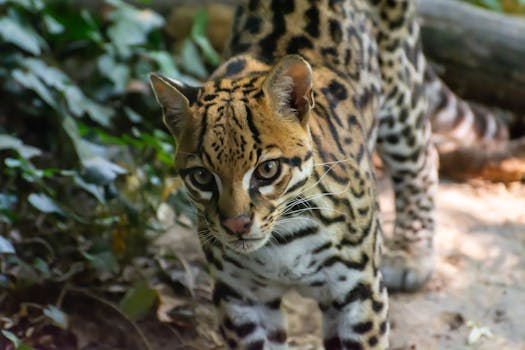
Pumas, or mountain lions as they are often called, are captivating creatures that evoke both awe and curiosity. These elusive felines roam vast territories and are an integral link in the natural ecosystems of the Americas. Their grace and power have been admired by humans for centuries, yet their existence is marred by the challenges of conservation and cohabitation with expanding human populations.
Table of Contents
Meet the puma
The puma animal is a remarkable species known for its adaptability and strength. Found across varied habitats in the Western Hemisphere, from Canada to the southern Andes, pumas have the most extensive range of any large wild terrestrial mammal in the Americas.
Pumas, scientifically recognized as Puma concolor, play a critical role in their environments as top predators. They maintain the balance by controlling the populations of other species, including herbivores that may otherwise overgraze the vegetation.

Despite their significance, pumas face numerous threats that challenge their survival. Through conservation efforts, it’s hoped that these majestic animals can continue to thrive for generations to come.
Where do pumas live?
- Spanning from the Canadian Yukon to the southern Andes, pumas have adapted to a variety of climates.
- They are found in environments ranging from dense forests to arid deserts, showcasing their versatility.
- Puma animal habitat fragmentation is a significant concern, as it leads to isolated populations and genetic bottlenecks.
Pumas require large territories for hunting and breeding, which are becoming increasingly scarce due to human encroachment and development.

How big is a puma?
As one of the largest cat species native to the Americas, an adult puma animal size can be quite impressive. Males typically weigh between 115 to 220 pounds, while females are slightly smaller, ranging from 64 to 141 pounds.
With a body length that can exceed 6 feet, not including their long tails, pumas have a muscular and agile build suited for their predatory lifestyle.
Their physical prowess is most evident in their ability to leap great distances, with horizontal jumps marked at up to 40 feet and vertical leaps reaching 18 feet high.
What does a puma look like?
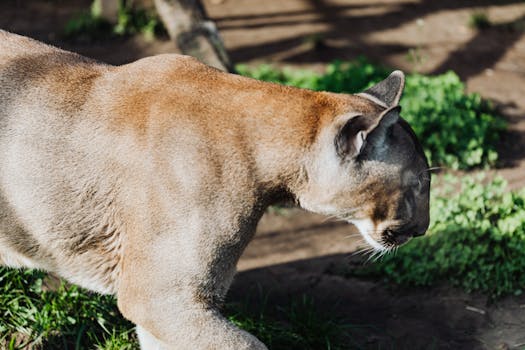
Pumas posses a slender and muscular physique. Their fur ranges from a light cinnamon to a silvery-grey, with lighter patches on their underbelly and a distinctive dark-tipped tail.
This camouflage aids them in hunting, allowing them to blend seamlessly with their surroundings.

They have small heads with sharp, forward-facing eyes which provide them with excellent vision, a necessity for tracking prey.
Pumas have retractable claws that they use with precision when hunting and climbing.
What does a puma eat?
The puma animal diet is primarily composed of meat. These apex predators often hunt deer, but they are also known to consume smaller animals when larger prey is scarce.

As opportunistic hunters, they adjust their diet based on availability, which may include anything from rodents to insects.
Pumas play a crucial role in controlling the population of their prey, thus maintaining ecological balance within their territory.
Are pumas nocturnal?
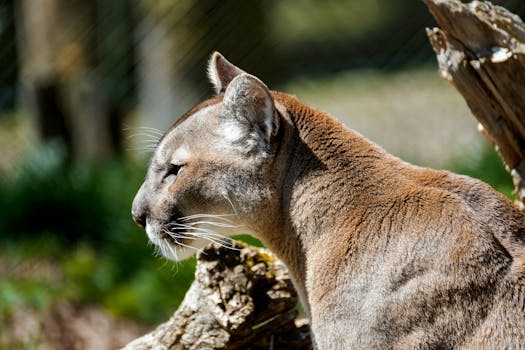
Pumas are crepuscular, meaning they are most active during dawn and dusk. However, they’ve been known to adapt their schedules in the presence of humans to become more nocturnal, thereby avoiding contact.
Their nocturnal behavior may enhance their ability to hunt, as they rely on stealth and surprise to catch their prey.

With excellent night vision, pumas navigate and hunt effectively under the cover of darkness.
How fast can a puma run?
While pumas are not the fastest of the big cats, they are capable of short bursts of speed, reaching up to 50 miles per hour. These sprints are usually utilized for ambushing prey rather than long pursuits.

Their agility and powerful limbs also contribute to their hunting success, allowing them to maneuver quickly and efficiently.
How many pumas are left in the world?
Estimating the exact number of pumas in the wild is challenging due to their secretive nature and vast territories. However, it’s believed that tens of thousands exist across their range, with larger populations in the western United States.

Conservation efforts are crucial in monitoring and preserving these numbers, especially in areas where they are at higher risk of conflict with human activities.

Are pumas endangered?
Currently, pumas are classified as ‘Least Concern’ by the IUCN. However, this status does not mean they are without threat. Localized populations, particularly in regions like Florida, are critically endangered.
Loss of habitat, hunting, and road accidents are among the leading causes for concern in puma conservation.

Organizations like Panthera and the Big Cat Sanctuary are actively working towards improving habitat connectivity and raising awareness about the importance of these animals.
Related questions about the puma’s ecology and human interactions
Are puma and cougar the same?
Puma and cougar are indeed the same animal. The names are interchangeable and refer to the same species, Puma concolor. This species is also commonly known as the mountain lion among numerous other regional names.

The variety of names reflects the wide distribution and diverse habitats these animals occupy, leading to different common names across regions.
Is a puma just a black panther?
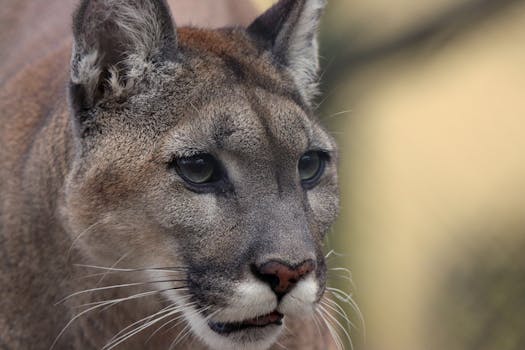
Contrary to popular belief, pumas are not black panthers. The term ‘black panther’ refers to melanistic individuals of species like leopards or jaguars. Pumas do not exhibit melanism and typically have a tawny to grey coat color.
Misconceptions about pumas being black panthers may arise due to their elusive nature and the mystery that surrounds their lifestyle.

Is puma a cat or lion?
The puma is a member of the Felidae family, making it a cat. It is often confused with lions due to the name ‘mountain lion’, but they are not closely related. Pumas are more closely related to smaller felines than to the large genus Panthera, which includes lions.
Despite their solitary nature, which contrasts with the social structure of lions, pumas share the same apex predator status in their respective ecosystems.
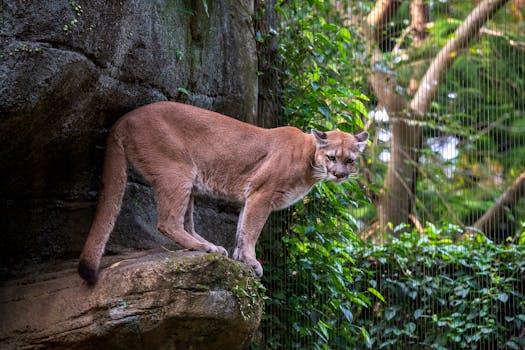
Are pumas friendly to humans?
As solitary and typically shy creatures, pumas are not considered friendly to humans. While attacks on humans are rare, they can occur, especially if a puma feels threatened or cornered.
It’s important for people living in or visiting puma habitats to be aware of their presence and take precautions to avoid encounters.
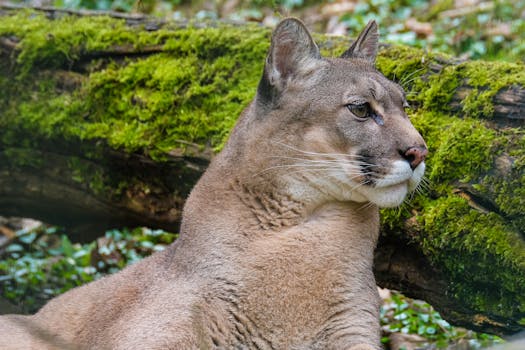
Pumas, also known as cougars or mountain lions, are a keystone species in their habitats. Understanding their behavior, habitat, and the challenges they face is crucial for their conservation. Their presence is a testament to the wilderness that still exists and a reminder of the delicate balance between humans and wildlife.