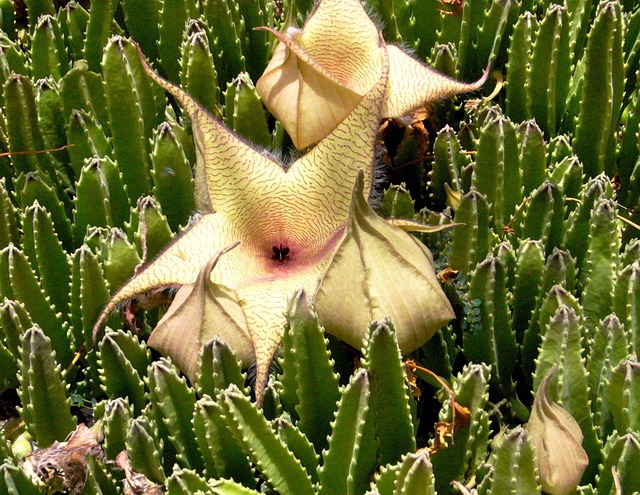
Stapelia plants, often likened to cacti due to their striking appearance and resilience, are fascinating succulents that captivate with their unusual flowers and ease of care. Native to the arid landscapes of southern Africa, they are a unique choice for both novice and experienced succulent enthusiasts.
Table of Contents
What are stapelia plants?
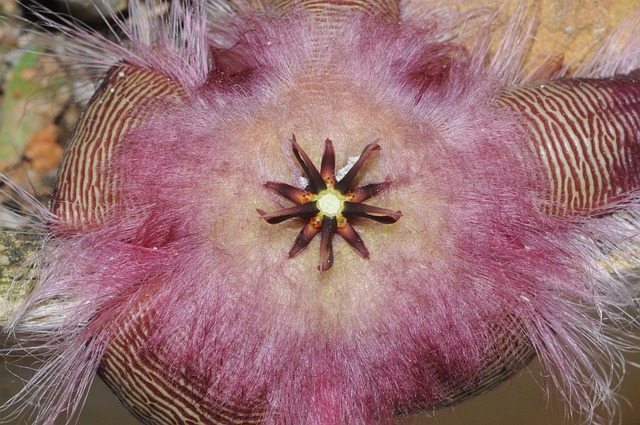
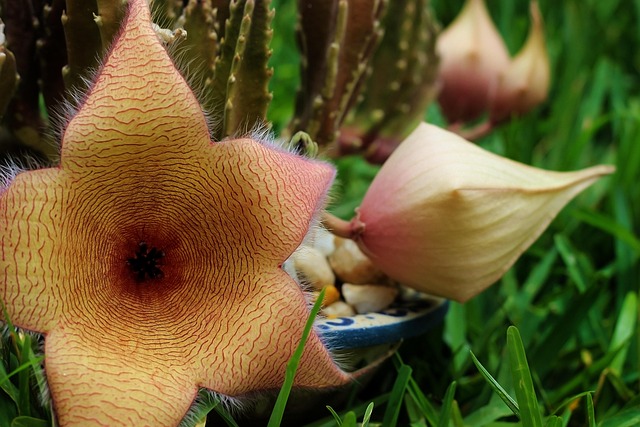
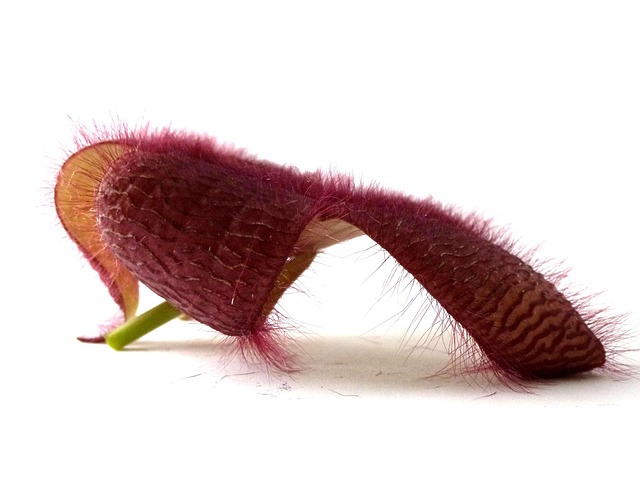
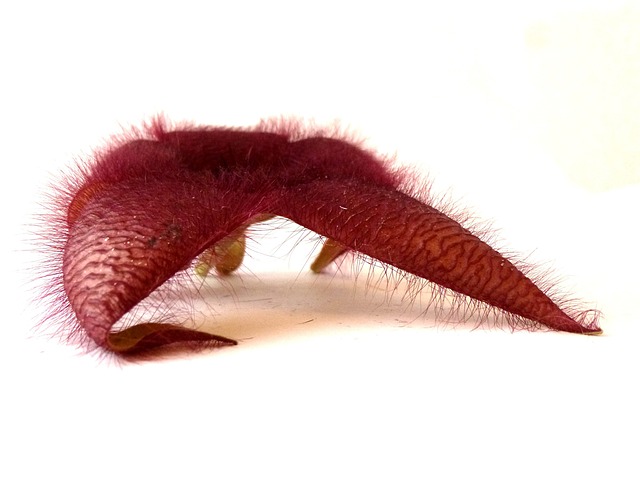
Known for their distinctive star-shaped flowers and robust nature, stapelia plants belong to the family Apocynaceae. They are sometimes referred to as “carrion flowers,” because they commonly emit a strong odor that resembles decaying flesh to attract their primary pollinators—flies.
These succulents prefer arid environments and have developed thick, fleshy stems that store water, allowing them to thrive in drought conditions. While they are often mistaken for cacti, they lack the characteristic spines found in cactus species.
How do you care for stapelia plants?
When it comes to stapelia care, the key is to replicate their natural habitat as closely as possible. They require a bright, indirect light environment to flourish. Direct sunlight can scorch their stems, so it’s important to provide some shade during the hottest parts of the day.
Watering should be done sparingly; these plants do not tolerate overwatering well. The best soil for stapelia is a well-draining mixture, similar to that used for other succulents or cacti. Allow the soil to dry completely between waterings, and reduce frequency during the winter months.
Although common stapelia problems are relatively few, they can include root rot due to overwatering, and pests such as aphids or mealybugs. Regular inspection and prompt treatment can prevent these issues from becoming serious.
What are the different varieties of stapelia?
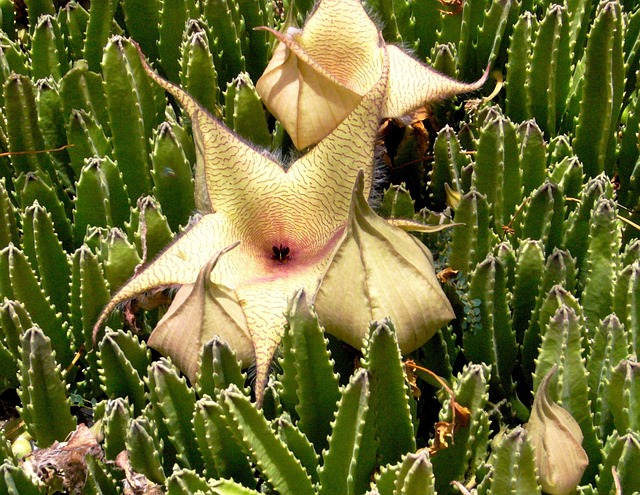
There are numerous varieties of stapelia plants, each with its unique flower colors and textures. Stapelia leendertziae, for instance, produces vibrant red blooms, while Stapelia gigantea showcases large yellow flowers with fine red lines. Stapelia variegata and Stapelia grandiflora offer intricate patterns and hues that add diversity to any collection.
Edithcolea grandis, although not a true stapelia, is often associated with them due to its similar flower structure and care requirements.
Each variety may have specific care needs, so it’s essential to research the particular type of stapelia you are growing.
How to encourage blooms in stapelia?
For those seeking to witness the extraordinary flowering of stapelia plants, certain conditions must be met. Firstly, providing a period of cooler temperatures during the winter can help stimulate blooming.
Stapelia flowering tips include placing your plant in a location where it receives the appropriate amount of indirect sunlight and ensuring that the plant is not overwatered. Fertilization should be done sparingly, as too much can harm the plant rather than encourage growth.
Patience is also crucial. Stapelia can take several years to produce their first blooms, but the reward of their unique and striking flowers is well worth the wait.
Why do stapelia flowers smell?
The notorious scent of stapelia flowers, often compared to that of rotting meat, serves a specific purpose in nature. This odor attracts flies, which are the primary pollinators of these plants. The smell increases the likelihood of successful pollination by mimicking the scent of a potential breeding ground for flies.
The intensity of the odor can vary between species and individual plants, but it is a common and natural characteristic of these otherwise delightful succulents.
Is stapelia suitable for indoor gardening?
Despite their unusual odor, stapelia plants can be suitable for indoor gardening, especially for those who appreciate unique and low-maintenance plants. When grown indoors, it’s important to ensure they receive sufficient light and are planted in the appropriate soil mix.
Their odor is only present when the flowers are in bloom, which is not a constant state, so indoor growers can enjoy these exotic plants without concern for a continuous smell.
Final thoughts on stapelia care
Stapelia plants are a distinctive and intriguing addition to any succulent collection. With their low water needs and striking appearance, they offer a touch of the exotic to both indoor and outdoor gardens.
By providing the right conditions and a little patience, gardeners can enjoy the unique beauty and remarkable blooms of these hardy succulents for years to come.
Related Questions on Stapelia Care and Features
Why do Stapelia flowers smell?
The odorous emissions from Stapelia flowers are a natural adaptation to attract pollinators, specifically flies, which are drawn to the scent of decaying material as a place to lay eggs. This symbiotic relationship ensures the continuation of the species despite its seemingly unpleasant trait to humans.
The strength and character of the scent can vary among species and individual plants, depending on factors such as age, humidity, and temperature.
What is the difference between Stapelia and Orbea?
While both Stapelia and Orbea belong to the same family and share similar characteristics, they are differentiated by their floral structures. Stapelia flowers tend to have a more bell-shaped corolla, while Orbea flowers are typically flat and star-shaped with angular lobes.
Orbea species also tend to have a more pronounced carrion smell compared to some Stapelia species, though both use this scent for pollinator attraction.
Is Stapelia poisonous?
Stapelia is not considered poisonous to humans or pets. However, its unpleasant smell when in bloom may be off-putting. As with any plant, it’s recommended to keep Stapelia out of reach of children and pets to prevent any potential irritation or allergic reaction.
Is Stapelia a cactus or succulent?
Though often mistaken for a cactus due to its fleshy stems and arid habitat preferences, Stapelia is a succulent. Cacti are a specific subset of succulents with distinct features such as areoles from which spines, branches, or flowers grow, which Stapelia plants lack.
For those looking to witness the unique charm of Stapelia plants, this video provides an insightful look into their world:
Discover the fascinating process of how Stapelia blooms and the role their scent plays in nature:
Interested in growing Stapelia in your own garden? Here’s a guide to get you started:
This guide is super helpful for anyone looking to dive into the world of stapelia plants! I love how it breaks down the care tips into easy steps, making it seem totally doable to keep these unique plants happy and thriving. The info about the flowers’ scent is fascinating too—it’s cool to learn how nature has its quirky ways of ensuring plant survival. Definitely inspired to try growing one indoors now!