Penguins are remarkable creatures, fascinating the world with their unique adaptations and charismatic behaviors. These flightless birds have captivated our imaginations and prompted many to wonder, where do penguins live? The answer takes us across the Southern Hemisphere, to some of the planet’s coldest and most remote regions.
Although often associated with the icy landscapes of Antarctica, penguins inhabit a surprisingly diverse range of environments. Their extraordinary adaptations allow them to thrive in these varied habitats, from frozen shores to tropical islands. Understanding the lives of these birds provides insight into the delicate balance of marine ecosystems and highlights the importance of conservation efforts.
Table of Contents
- Where do penguins primarily live?
- What do penguins eat in their natural habitat?
- How are penguins adapted to cold environments?
- What are the different types of penguins?
- Where can you find penguins in the Southern Hemisphere?
- How do penguins reproduce and care for their young?
- What are the main threats to penguin species?
- Related questions about penguin habitats and behaviors
Where do penguins primarily live?
Penguins are synonymous with the Southern Hemisphere, where they are found on every continent. The majority of penguins live in Antarctic regions, with species like the Emperor Penguin and the Adélie Penguin calling the icy continent home. These birds have developed unique adaptations to survive the extreme cold, such as a layer of insulating feathers and a countercurrent heat exchange system in their extremities.
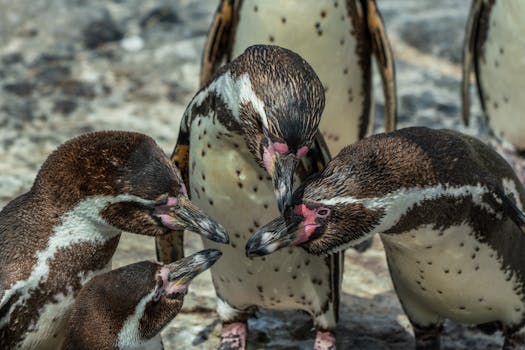
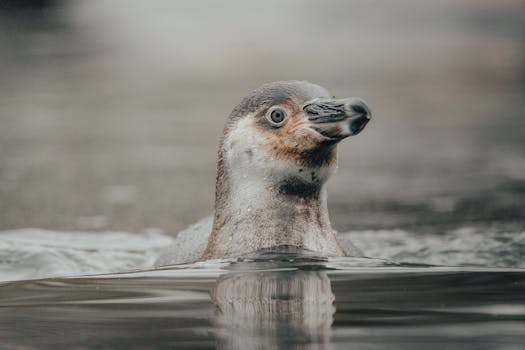
However, not all penguins reside in such frigid climates. Some species are found on the coasts of Africa, Australia, and South America, and even as far north as the Galápagos Islands, situated near the equator. The temperate-climate Humboldt Penguin and the tropical Galápagos Penguin exemplify the adaptability of these birds.
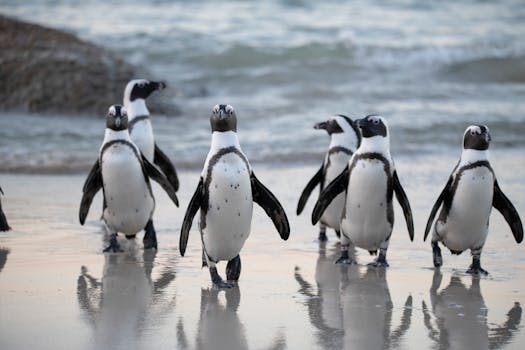
While many penguins live in close-knit colonies for breeding and social interaction, their living conditions in Antarctica and beyond include rocky beaches, cliffs, and even forested areas for those species dwelling at lower latitudes.
What do penguins eat in their natural habitat?
Penguins are maritime birds, spending a significant portion of their lives at sea where they hunt for food. Their diet primarily consists of marine life such as fish, squid, and krill, which they are adept at catching thanks to their streamlined bodies and powerful flippers. In the wild, the exact composition of a penguin’s diet varies depending on the species and the availability of prey in their habitat.
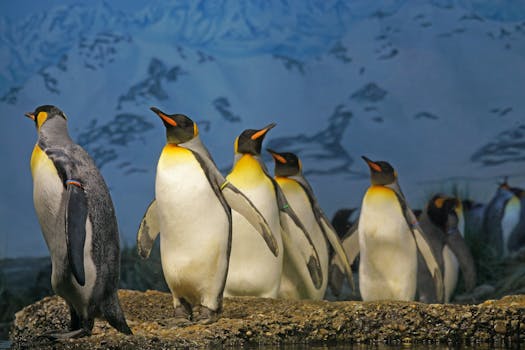
The way penguins feed reflects their ecological niche. For example, the Emperor Penguin can dive to great depths and stay underwater for extended periods, allowing it to hunt prey other birds cannot reach. Conversely, smaller species may feed on surface-swimming fish and invertebrates.
Feeding habits and diet of penguins are crucial for their survival, and they are known to travel great distances to find sufficient food, with some species even venturing into open ocean waters during foraging trips.
How are penguins adapted to cold environments?
The extreme cold of the Antarctic and sub-Antarctic regions is inhospitable to most species, but penguins have developed a range of adaptations to live comfortably in these climates. Their bodies are covered in a thick layer of blubber that provides insulation, and their feathers are densely packed to create a waterproof barrier against the icy waters.
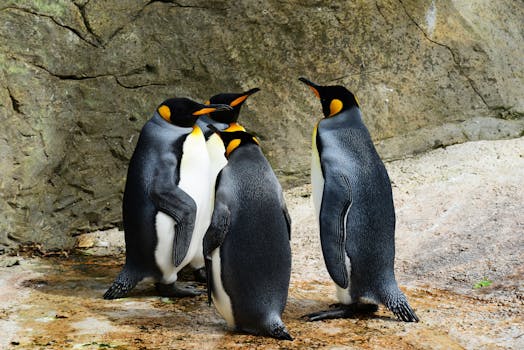
Penguins also exhibit unique behaviors to conserve heat, such as huddling together in large groups. This social behavior minimizes heat loss and protects individuals from the elements. Additionally, their circulatory system is adapted to prevent heat loss, ensuring their core body temperature remains stable even in freezing waters.
Penguins’ strong legs and webbed feet are not just for swimming – they also help in locomotion on land, where they can toboggan on their bellies to conserve energy while moving across the snow and ice.
What are the different types of penguins?
There are approximately 18 recognized species of penguins, each with its distinctive features and habitats. The largest of these is the Emperor Penguin, famous for its impressive size and the arduous breeding cycle it undergoes during the Antarctic winter. On the smaller end of the spectrum, the Little Blue Penguin, also known as the Fairy Penguin, resides in the coastal waters of Australia and New Zealand.
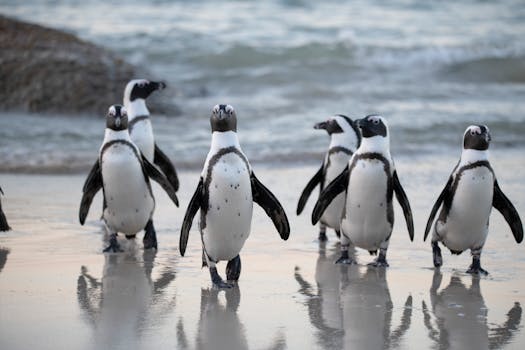
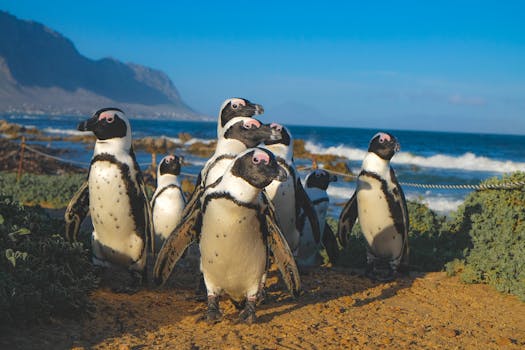
Other notable species include the King Penguin, found in sub-Antarctic regions, and the African Penguin, which lives on the southern coast of Africa. The diversity of penguin species showcases the various adaptations they have evolved to suit their particular environments, with differences in size, plumage, and behavior reflecting the specialized needs of each species.
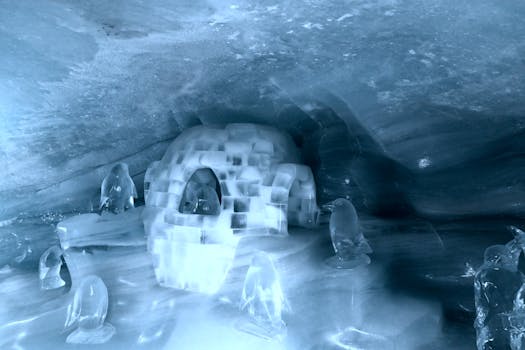
From the habitats of different penguin species to their breeding and feeding habits, penguins demonstrate an impressive range of diversity within the Spheniscidae family.
Where can you find penguins in the Southern Hemisphere?
The Southern Hemisphere is the exclusive domain of penguins, where they inhabit a variety of coastal environments. Antarctica is home to the largest populations, with vast colonies established on its shores and islands. The continent’s extreme conditions have shaped these penguins into resilient and resourceful birds.
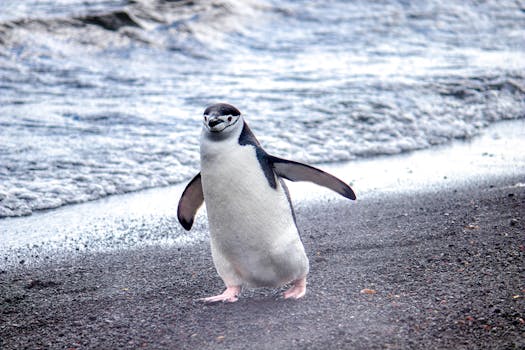
Beyond the Antarctic, penguins are found on the southern coasts of Africa, South America, and Australia, as well as on many sub-Antarctic islands. Each location offers unique challenges and resources that penguins have adapted to, allowing them to thrive in environments ranging from the coldest ice sheets to temperate and even tropical beaches.
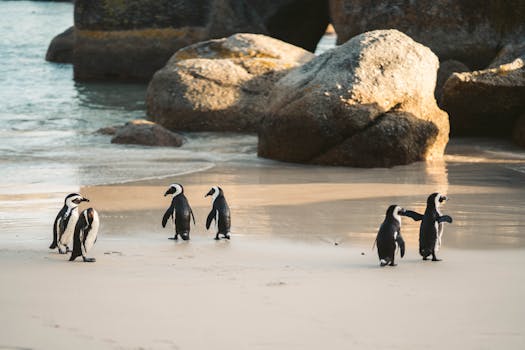
For those looking to observe penguins in their natural habitats, there are numerous locations across the Southern Hemisphere where they can be seen, from the remote Falkland Islands to the more accessible South African coast.
How do penguins reproduce and care for their young?
Reproduction and parental care are central aspects of penguin life. Most species are monogamous, at least for a breeding season, and they share the responsibilities of incubating their eggs and feeding their young. The breeding sites, often referred to as rookeries, can range from vast colonies with thousands of birds to small, secluded nesting areas.
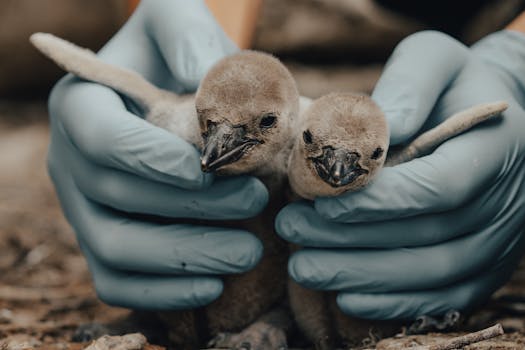
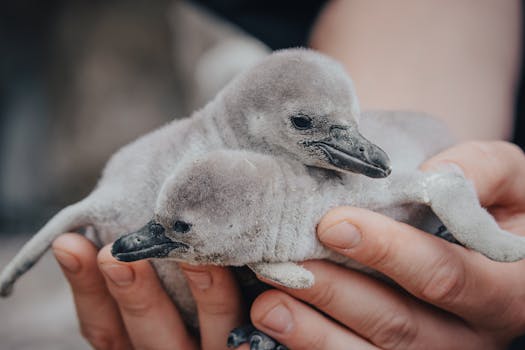
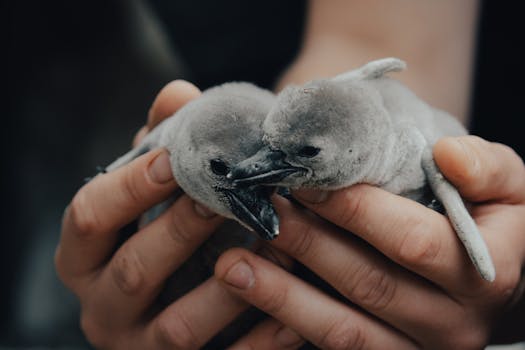
Penguins lay one to two eggs, and both parents take turns keeping the eggs warm in a practice known as incubation. Depending on the species, incubation can last from a month to over two months. After hatching, penguin chicks are cared for by their parents, who regurgitate pre-digested food for them to eat.
The survival of young penguins is heavily reliant on the parental investment, which includes not only feeding but also protection from predators and harsh weather. Penguin nesting behaviors are complex and fascinating, with some species building nests from pebbles or vegetation, while others, like the Emperor Penguin, incubate their eggs on top of their feet, covered by a warm layer of abdominal skin called a brood pouch.
What are the main threats to penguin species?
Penguins face several threats that endanger their survival, with climate change being one of the most significant. As temperatures rise and ice melts, penguin habitats are altered, affecting their breeding grounds and food availability. Additionally, human activities such as overfishing deplete the essential marine resources that penguins rely on for nourishment.
Habitat loss due to coastal development and pollution are other serious concerns. Penguins are particularly vulnerable to oil spills, which can damage their feathers and impair their ability to regulate their body temperature. Furthermore, invasive species introduced to penguin habitats can disrupt the delicate ecological balance and compete with penguins for food and nesting sites.
Conservation efforts are crucial in addressing these challenges. Many organizations are working to protect penguin populations through habitat preservation, sustainable fishing practices, and raising awareness of the importance of these birds in marine ecosystems.
Related questions about penguin habitats and behaviors
Do penguins live in the North Pole or South Pole?
Penguins are exclusively found in the South Pole region and the Southern Hemisphere. There are no native penguin species in the Arctic or the North Pole. This distribution is due to historical and evolutionary factors that have confined penguin species to the southern reaches of the globe.

The cold, nutrient-rich waters of the Southern Ocean provide an ideal habitat for penguins, offering abundant food and suitable breeding conditions. As such, penguins have become an iconic symbol of Antarctica and its surrounding environments.
Where does the penguin reside?
Penguins reside in a variety of coastal habitats across the Southern Hemisphere. From the icy shores of Antarctica to the temperate beaches of New Zealand and the tropical Galápagos Islands, penguins have adapted to a wide range of environmental conditions. Each species has found its niche, with some preferring rocky outcroppings for nesting, while others burrow into the sand or vegetation.
The common factor among all penguin habitats is their proximity to the ocean, as penguins spend much of their lives in the water and depend on marine resources for their survival.
Why are there no penguins at the North Pole?
There are no penguins at the North Pole due to historical geographical isolation and the absence of an evolutionary drive for penguins to migrate there. Penguins evolved in the Southern Hemisphere, where they have adapted to the available ecological niches. The Arctic ecosystem is home to other seabirds and marine mammals that fill similar ecological roles as penguins, such as the puffin and the walrus.
Additionally, the presence of land predators in the Arctic could pose a significant threat to penguins, which have not evolved the necessary defenses to cope with such threats.
Where do penguins live and what do they eat?
Penguins live in various coastal regions of the Southern Hemisphere. Their diets consist mainly of fish, squid, krill, and other small marine animals. The availability of prey in their habitat dictates the specific dietary choices of different penguin species, with some specializing in certain types of marine life.
Penguins are efficient hunters, employing their speed and agility in the water to catch their prey. Their keen eyesight and excellent diving abilities enable them to spot and pursue food sources in the often murky depths of their oceanic hunting grounds.
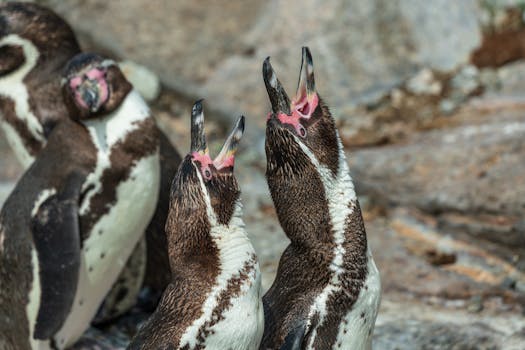
In conclusion, penguins are fascinating and resilient birds that have mastered the art of survival in some of the harshest environments on Earth. Their unique behaviors, dietary habits, and reproductive strategies have enabled them to thrive in a variety of habitats within the Southern Hemisphere. Protecting these emblematic creatures and their habitats is essential to preserving the intricate balance of marine ecosystems and ensuring that future generations can continue to marvel at the wonders of penguin life.